Veterinary APPE Rotation Gives Pharm.D. Students a Rare Look into Animal Care

LAWRENCE – Joseph Parks, Pharm.D. candidate from Troy, KS, recently completes his final Advanced Pharmacy Practice Experience (APPE) at the Veterinary Health Center at Kansas State University’s main campus in Manhattan, KS. This APPE was expected to challenge him and encourage him to think more clinically; it also reshaped how he thought about pharmacy practice.
Parks spent a month at the Veterinary Health Center; his placement allowed him to work directly with veterinarians, veterinary students, and a wide range of animals. From diabetic housecats to foals, cattle to zoo animals, Parks highlighted that this side of clinical practice is not talked about as much in pharmacy school.
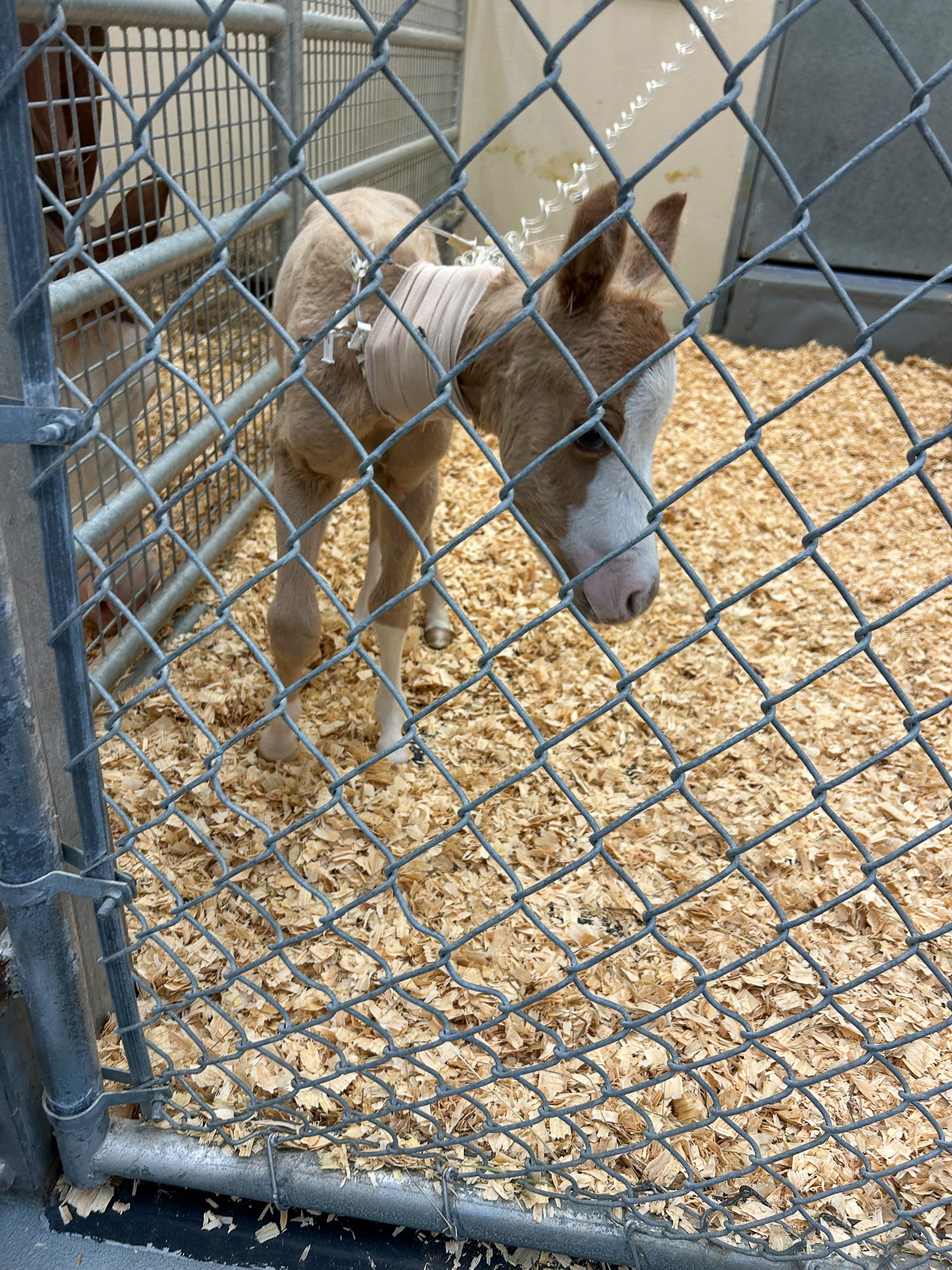
“It gave me an opportunity to see another side of the health care field,” Parks said. “I was learning new drugs, new disease states, new pharmacotherapy — things we don’t typically cover in depth.”
Unlike most APPEs, the veterinary rotation assigns students to a different specialty each day. Parks rounded with new teams each morning, including equine surgery, small animal medicine, exotics and oncology. He compared the structure to an ambulatory care rotation, with a strong emphasis on clinical reasoning.
He observed surgeries, followed veterinary students through full patient encounters and participated in case discussions that pushed his diagnostic thinking. The setup, he said, made the rotation feel less like traditional pharmacy staffing and more like an advanced clinical immersion.
One of the biggest surprises was learning how a veterinary pharmacy operates. Instead of electronic orders, veterinary students’ hand‑write prescriptions for both inpatient and outpatient use.
“Everything was on paper scripts, you had to use your basic pharmacy knowledge,” Parks said.
Without electronic safeguards, students must determine what information is required on a prescription and whether a medication is appropriate or available. The pharmacy also performs extensive compounding, preparing suspensions, repackaging medications and completing USP 800–compliant hazardous drug compounding for veterinary chemotherapy.
Parks also saw firsthand how animal pharmacotherapy differs from human care. Animals cannot describe their symptoms, so treatment decisions often prioritize quality of life over long‑term side‑effect concerns. Drug metabolism varies widely between species; Parks noted that acetaminophen toxicity in cats presents differently than in humans.
Working alongside veterinary students gave Parks a deeper appreciation for their work and strengthened interprofessional collaboration. The rotation also broadened his understanding of career possibilities within pharmacy.
While he does not plan to pursue veterinary pharmacy upon graduation, Parks said he would consider it if the right opportunity arose.
Parks will receive his Pharm.D. at the KU School of Pharmacy’s Hooding Ceremony on May 16, 2026. After graduation, he will begin a PGY1 residency in acute care at the University of Iowa, where he plans to expand his interests in critical care and emergency medicine.