PharmD students expand community access with preventative health screenings
LAWRENCE - University of Kansas School of Pharmacy students supported expanding access to basic preventative health services by offering free blood pressure and blood glucose screenings at The Merc Co‑op on February 26, 2026. The screenings were conducted by the KU chapter of the American Pharmacist Association or Student Pharmacists (APhA-ASP).

Emily Lancaster, a third‑year pharmacy student from Fort Scott, and current co-chair of Operation Diabetes, and Jordan Schmidt, a third‑year student from Fredonia, and vice president of health maintenance, participate in the outreach through APhA‑ASP’s patient care projects. Their involvement reflects the organization’s mission to bring basic health services directly to local residents.
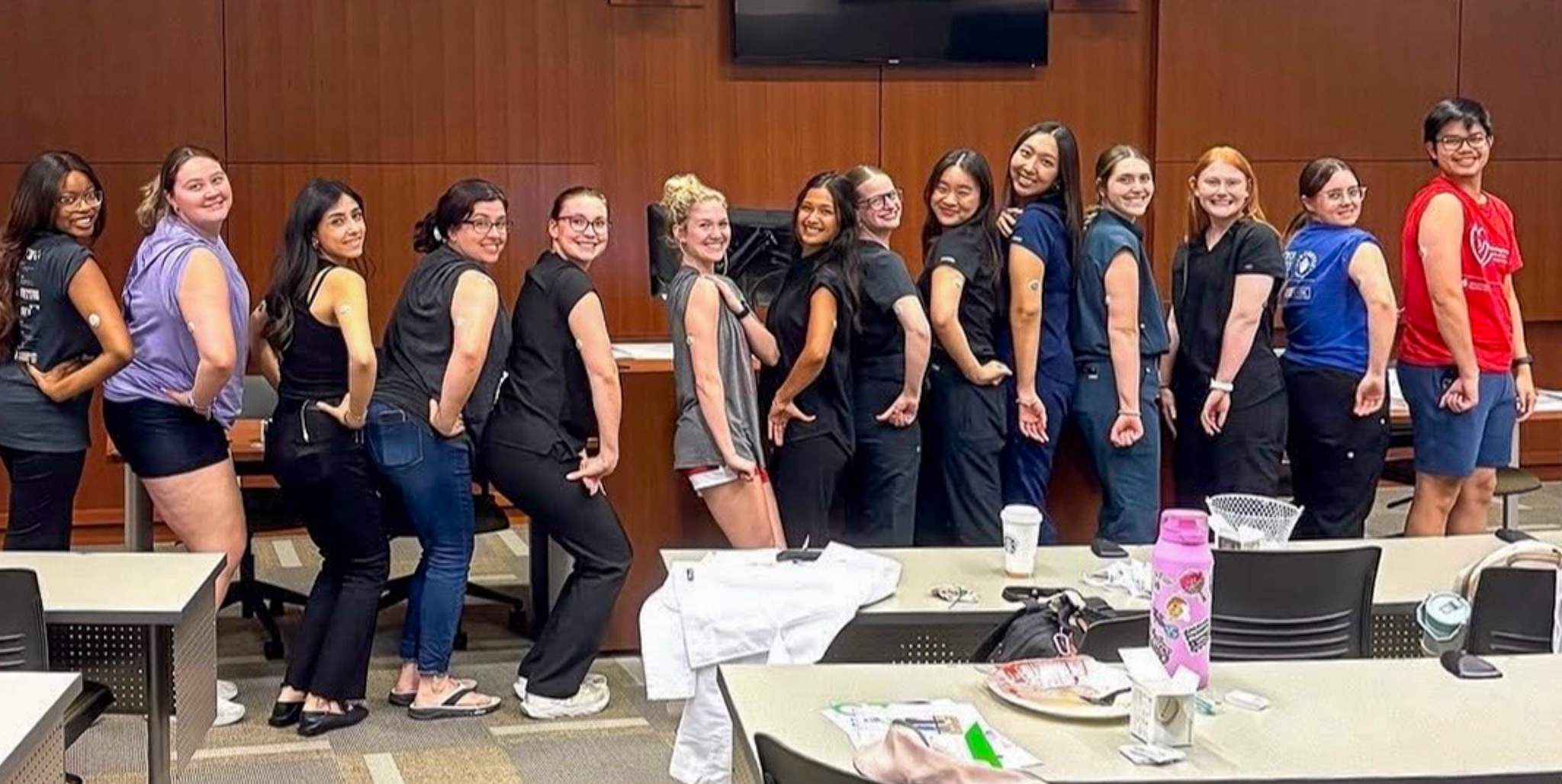
One of the organization’s key initiatives, Operation Diabetes, plays an important role in connecting students with patients living with or at risk for diabetes. The project introduces pharmacy students to diabetes management and prevention through presentations, device demonstrations and patient outreach. It includes opportunities to work with technologies such as continuous glucose monitors (CGMs) and to learn from diabetes educators.
Schmidt, who previously chaired the initiative, said she has seen the program grow from ideas she developed into efforts implemented by this year’s leaders, including events that allow students to wear CGMs and better understand patients’ day‑to‑day experiences.
Meeting Community Members Where They Are
The screenings provide a quick, no-cost opportunity for community members to learn about their health. Many participants had not seen a physician in several years, highlighting a gap in local access and awareness that student-led outreach helps address.
Schmidt observed that several participants had not been to the doctor in a little while, noting how common it is for individuals to be unsure of their current health status.
Because the screenings take place where people already shop or gather, they create organic opportunities for health engagement. Community members often stop spontaneously. Jordan explained that people come in for groceries, see the screening table and think, “Why don’t I just stop and get my blood pressure checked?”
Practice-Based Learning in Action
Both students bring classroom and laboratory training directly into these community interactions. Through KU’s pharmacotherapy courses and skills labs, they have learned to use glucometers, continuous glucose monitors, blood pressure cuffs and insulin pens. These skills are essential for the screenings.
In practice, the students encounter the unpredictability of real cases. Schmidt noted that a man who had been running around and smoking, a combination that typically elevates blood pressure, had only mildly high readings. Real patient interactions do not always follow the script.
Lancaster noted that her experiences in the pharmacy skills lab gave her the opportunity to practice skills on each other and provided her with the tools she needed to offer counseling to patients.
Community Health Literacy & Pharmacists’ Expanding Role in Prevention
Students also use these interactions to improve health literacy. Many community members are unfamiliar with medical terminology or device instructions, prompting student pharmacists to translate clinical concepts into practical advice. This may include explaining what constitutes “high blood sugar” or demonstrating proper home blood pressure monitoring, sometimes through interpreters for non‑English‑speaking patients.
The screenings not only identify possible health concerns but also empower individuals to take follow‑up steps, such as discussing results with their primary care providers. Although students cannot prescribe medications, they provide handouts and guidance that encourage patients to seek additional care when needed.
The outreach reflects a broader shift toward expanded pharmacist involvement in preventative health. Pharmacists often serve as the first point of contact for families seeking advice about minor illnesses, over-the-counter medications or injuries.
Emerging pharmacy services, including test‑to‑treat models for infections, are designed to reduce barriers to care by allowing pharmacists to assess and treat select conditions without requiring a doctor’s visit.
Legislative efforts underway in Kansas aim to further broaden that scope of practice. These efforts are aimed at expanding test‑to‑treat capabilities, which would allow pharmacists to diagnose and initiate treatment for infections such as flu or COVID‑19, reducing the need for clinic visits.
Both students say these experiences are shaping how they hope to practice after graduation.