Out-of-state PharmD candidate finds her calling through nontraditional experiential rotations
LAWRENCE - When Maddie started her undergraduate degree, pharmacy wasn’t part of the plan.
“I always say I got into pharmacy on accident,” she said with a laugh.
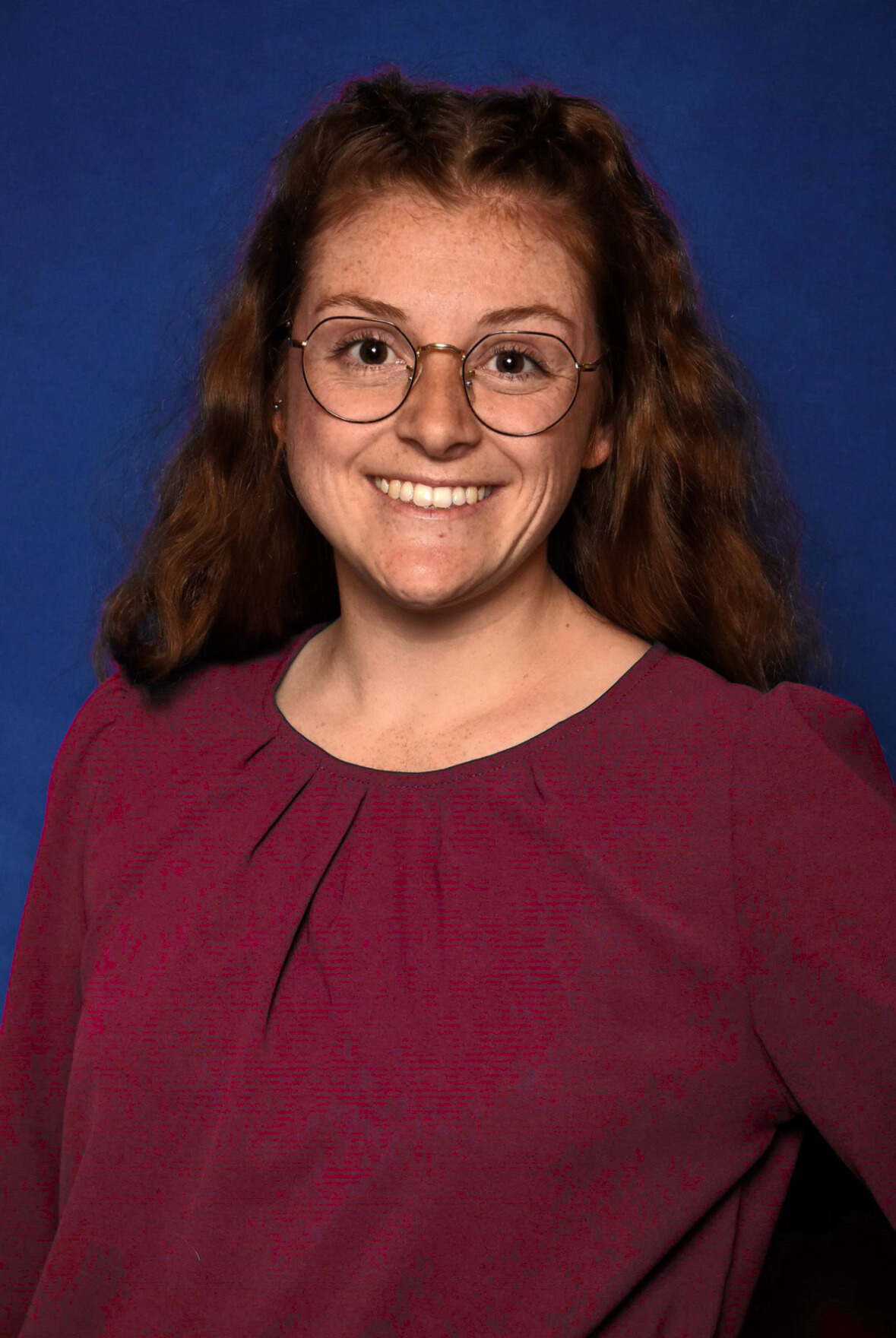
As a chemistry major focused on forensics, Maddie planned to become a forensic investigator. She completed internships with the state of Kentucky and pictured a future in crime labs. But when the COVID‑19 pandemic disrupted everything, she found herself working in food service and rethinking her next step.
On a whim, she applied for a technician position at a local CVS, a decision that changed everything.
The pharmacists she worked with weren’t simply training her; they were mentoring her as a colleague. They nurtured her curiosity and encouraged her excitement about the science behind patient care. What began as a job became a calling.
When it came time to apply to pharmacy school, Maddie already knew what she wanted: a place where her scientific passion could grow. She found that at the University of Kansas School of Pharmacy.
Walking Into the Unknown While Finding Community
Coming to KU as an out‑of‑state student from northeast Ohio, Maddie knew almost no one. Many classmates already had built friendships through KU’s 2+4 PharmD program. She was stepping into a room full of unfamiliar faces.
But from her first interview, something felt different.
“I left that day skipping to the car,” she said. “It just felt like home.”
That sense of belonging was personal and emotional.
Even in a class of nearly 100 students, her professors know her by name. They check in, make time and take an invested interest in her well‑being inside and outside the classroom. Some have even become close enough to attend her wedding this spring.
That mentorship mattered most during her P1 year, when the academic transition proved harder than expected.
“There was a moment where I thought, ‘Is this it? Do I drop out?’” she said. “And my professors just kept telling me, ‘You’re going to be fine.’ And they were right.”
Experiential Education That Opens Doors
At KU School of Pharmacy, experiential education isn’t one‑size‑fits‑all.
Maddie helped create two of her own rotations, including out‑of‑state experiences aligned with her passion for working with incarcerated populations. A formative experience at Fulton State Hospital solidified that calling. She said her time there strengthened her love for working with individuals and providing quality, patient‑centered care.
Through her leadership role in the Student National Pharmaceutical Association, she regularly connects with pharmacy students nationwide. Many, she said, do not have the same flexibility to tailor their Advanced Pharmacy Practice Experiences.
In Advance Pharmacy Practice Experiences (APPE) students can pursue rural health, federal service, ambulatory care and many other nontraditional settings. They’re encouraged to innovate and go beyond basic participation.
Those opportunities often require financial support.
“I was fortunate,” she said. “If I hadn’t had financial assistance or school‑provided housing, I wouldn’t have been able to pursue some of those rotations.”
Support for experiential education, including housing assistance, travel funding and expanded partnerships, ensures opportunity isn’t limited by circumstance.
The Power of Financial Support
As an out‑of‑state student, Maddie initially faced nearly $250,000 in projected loans. Through financial support from the School of Pharmacy, she has cut that amount in half, lifting the burden and fear of debt from her shoulders.
“That has been incredibly alleviating,” she said. “It allowed me to worry less about repayment and focus more on becoming the best pharmacist I can be.”
Financial support encourages confidence, bolsters mental health and provides long‑term career freedom. It allows students to pursue purpose‑driven paths, including public service.
KU Made and Prepared to Serve
After graduation, Maddie will commission into the U.S. Public Health Service and serve as a clinical pharmacist with the Federal Bureau of Prisons.
She was selected during her P3 year through the Senior Commissioned Officer Student Training and Extern Program, a highly competitive pathway leading directly into federal service.
It’s a nontraditional route that KU helped her build. On rotations, she was treated as a colleague. Instead of being relegated to paperwork, she developed care plans and patient recommendations.
“That foundation of experiential education gave me the confidence to speak up,” she said. “To say, ‘Here’s what I think would be best for this patient.’”
More Than a Degree
When asked what she wants KU School of Pharmacy supporters to know, her answer is simple:
“This place doesn’t just educate you. It welcomes you. Every single person here is excited to teach, excited to learn, excited for you to become their colleague.”
Her parents attended KU for graduate school and often spoke about the sense of family they felt. Growing up, she rolled her eyes at the sentiment, and now she has lived it.
“I didn’t want to be a number,” she said. “And at KU, you’re not.”
Pharmacy students like Maddie are not only earning degrees, they’re being prepared to serve, lead and care for the communities that need them most.
Support for the KU School of Pharmacy supports scholarships, experiential education and mentorship that transforms uncertainty into calling.